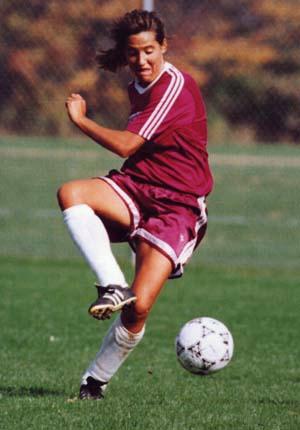
 Paula Wilkins played for UMass in the early 90s.
Wilkins sells Badgers on pushing their limits

January 9, 2010


Leaving a comfort zone is always a challenging task.
For Wisconsin women’s head coach Paula Wilkins, leaving an attractive and comfortable situation three years ago at Penn State, where she had cut her coaching teeth and won multiple Big Ten championships, was always going to be a tough mission.
As it turned out, in appealing to her new playing roster at Wisconsin, Wilkins managed to stretch herself as a coach and person in the process. The result paid off in this past season as the Badger advanced to the round of 16 in the NCAA Tournament, but more importantly bought into Wilkins’ message, which should pay huge dividends for the program in the years ahead.
When she chose to leave Penn State, Wilkins knew she would be arriving at a different situation in Madison, but she admits now she underestimated just how much of an adjustment she would have to make.
“At first I was mainly reacting to what I saw when I got here, because when I got to Penn State I was an assistant and we started the program, so it was a whole different situation,” she said. “When Pat Farmer (previous head coach at Penn State) left, it was more of a continuation of what we were doing, even though making the jump to head coach was still a challenge.
“Coming here was another new challenge,” she continued. “I didn’t know what to expect. It took a year or two years to realize what I was doing. At first I was trying to do some things we did at Penn State here, and it wasn’t working. It wasn’t the same players, and I didn’t have the same relationships. That was nothing against the players who were here, but in the recruiting process you had to develop expectations and a rapport – I thought that would happen but it’s sort of a guessing game at the beginning.”
Paula Wilkins played for UMass in the early 90s.Wilkins said that changing the psychology and the culture of the program was as important if not more so than any tactical changes or roster moves.
“Leadership is a huge part of any team. Having players believe in what they can do is so important,” she said. “At Penn State that belief was already there, but I didn’t really know how it was formulated. I had to come up with different ways to convince them to be confident. I think I had to find where that was going to come from for them and give them that sort of support. That sort of all falls into the culture and it was the biggest thing I had to learn. From a coaching perspective I had to grow so much more.”
Success on or off the field definitely did not come overnight.
I had to push the players more to create that atmosphere, and they are slowly getting it. For the first two years I felt I was banging my head against the wall, but now they are getting it and it is so great to see.”
Taking on a de facto role as team psychologist, Wilkins said a lot of off-field work last spring paid dividends for the Badgers this season.
“I made some presentations for the team. We took time in meetings, going over our philosophy and ideas and accountabilities like we’d never really done before,” she said. “We spent as much time off the field as we did on it, just talking about that sort of mentality.
“It really got me out of my comfort zone,” she added. “There really is no right way. You just have to figure out what works and go with it.”
Wilkins, who played her college soccer at Massachusetts and hails from Middletown, PA, explained that it was important to get the message across early on with her incoming players.
“If we tell them (freshmen) on the first day (figuratively), ‘we’re going to run 50 miles a day,’ they’ll say ‘we can’t’ and we’ll say ‘this is what we do’– they just accept it. After the first year I had some upperclassmen saying they didn’t want to do things like that, well that demeanor permeates through the team. There were some players who wanted to play soccer but didn’t realize there is a price to pay. We talked about that last spring and they started to buy into it. We started to see some success.”
One example of a challenge Wilkins put before the team was to declare that players wouldn’t kick a soccer ball until they passed a fitness test.
“Nobody batted an eye about that this year, because they saw what a difference it had made,” she said. “This year I will challenge them with something new. Don’t ask me what it is because I don’t know yet, but it will be something good.”
Of course getting the right players in makes a difference as well, and Wilkins was able to recruit Alaska’s Alev Kelter, a hugely talented midfielder who also plays ice hockey at Wisconsin. Finding players who fit specific roles has been an important part of the building process.
“You try to find the best players and players who complement each other. Alev has a great ability to win balls in the midfield while a player like Monica Lam-Feist doesn’t want to head a ball but is great with the ball at her feet. Jerry Yeagley (former Indiana men’s coach) used to talk about having piano carriers and piano players. We try to get our core players from Wisconsin, Minnesota and the Chicago area, and may go outside of that for the special players, although once in a while a special player will come out of this area too,” she said. “You can still find kids people don’t know much about who will impact the program immensely. If you look at a lot of teams there will be two or three players who really make a difference, but the other players are still so important to your program.”
Wilkins credits former boss and now assistant Pat Farmer, plus goalkeeping coach Tim Rosenfeld with playing a cruicial role in the team’s resurgence. With the successful 2009 season behind the program, Wilkins expects a recruiting benefit, but points out that coaches are working on their 2011 and 2012 graduating classes now, so there is a bit of a delay in place.
A delay is what also occurred before Wilkins knew things were going to work out at Wisconsin.
“In my first two years, I did not see daylight,” she said. “I thought ‘Oh my gosh.’ It was not a pleasant experience, but mostly this year I started seeing a change in the mentality of the players – even beyond the success we had on the field. I had a senior crying at the end saying ‘I didn’t believe I could do this. I didn’t think I had that ability.’ I didn’t have that connection with players and I had to get that back and see I can impact people’s lives again and be successful and grow as a coach. This has been entertaining and we’ve had a lot of challenges, but the big challenge now is continuing that success.”
For Wisconsin women’s head coach Paula Wilkins, leaving an attractive and comfortable situation three years ago at Penn State, where she had cut her coaching teeth and won multiple Big Ten championships, was always going to be a tough mission.
As it turned out, in appealing to her new playing roster at Wisconsin, Wilkins managed to stretch herself as a coach and person in the process. The result paid off in this past season as the Badger advanced to the round of 16 in the NCAA Tournament, but more importantly bought into Wilkins’ message, which should pay huge dividends for the program in the years ahead.
When she chose to leave Penn State, Wilkins knew she would be arriving at a different situation in Madison, but she admits now she underestimated just how much of an adjustment she would have to make.
“At first I was mainly reacting to what I saw when I got here, because when I got to Penn State I was an assistant and we started the program, so it was a whole different situation,” she said. “When Pat Farmer (previous head coach at Penn State) left, it was more of a continuation of what we were doing, even though making the jump to head coach was still a challenge.
“Coming here was another new challenge,” she continued. “I didn’t know what to expect. It took a year or two years to realize what I was doing. At first I was trying to do some things we did at Penn State here, and it wasn’t working. It wasn’t the same players, and I didn’t have the same relationships. That was nothing against the players who were here, but in the recruiting process you had to develop expectations and a rapport – I thought that would happen but it’s sort of a guessing game at the beginning.”
Paula Wilkins played for UMass in the early 90s.“Leadership is a huge part of any team. Having players believe in what they can do is so important,” she said. “At Penn State that belief was already there, but I didn’t really know how it was formulated. I had to come up with different ways to convince them to be confident. I think I had to find where that was going to come from for them and give them that sort of support. That sort of all falls into the culture and it was the biggest thing I had to learn. From a coaching perspective I had to grow so much more.”
Success on or off the field definitely did not come overnight.
I had to push the players more to create that atmosphere, and they are slowly getting it. For the first two years I felt I was banging my head against the wall, but now they are getting it and it is so great to see.”
Taking on a de facto role as team psychologist, Wilkins said a lot of off-field work last spring paid dividends for the Badgers this season.
“I made some presentations for the team. We took time in meetings, going over our philosophy and ideas and accountabilities like we’d never really done before,” she said. “We spent as much time off the field as we did on it, just talking about that sort of mentality.
“It really got me out of my comfort zone,” she added. “There really is no right way. You just have to figure out what works and go with it.”
Wilkins, who played her college soccer at Massachusetts and hails from Middletown, PA, explained that it was important to get the message across early on with her incoming players.
“If we tell them (freshmen) on the first day (figuratively), ‘we’re going to run 50 miles a day,’ they’ll say ‘we can’t’ and we’ll say ‘this is what we do’– they just accept it. After the first year I had some upperclassmen saying they didn’t want to do things like that, well that demeanor permeates through the team. There were some players who wanted to play soccer but didn’t realize there is a price to pay. We talked about that last spring and they started to buy into it. We started to see some success.”
One example of a challenge Wilkins put before the team was to declare that players wouldn’t kick a soccer ball until they passed a fitness test.
“Nobody batted an eye about that this year, because they saw what a difference it had made,” she said. “This year I will challenge them with something new. Don’t ask me what it is because I don’t know yet, but it will be something good.”
Of course getting the right players in makes a difference as well, and Wilkins was able to recruit Alaska’s Alev Kelter, a hugely talented midfielder who also plays ice hockey at Wisconsin. Finding players who fit specific roles has been an important part of the building process.
“You try to find the best players and players who complement each other. Alev has a great ability to win balls in the midfield while a player like Monica Lam-Feist doesn’t want to head a ball but is great with the ball at her feet. Jerry Yeagley (former Indiana men’s coach) used to talk about having piano carriers and piano players. We try to get our core players from Wisconsin, Minnesota and the Chicago area, and may go outside of that for the special players, although once in a while a special player will come out of this area too,” she said. “You can still find kids people don’t know much about who will impact the program immensely. If you look at a lot of teams there will be two or three players who really make a difference, but the other players are still so important to your program.”
Wilkins credits former boss and now assistant Pat Farmer, plus goalkeeping coach Tim Rosenfeld with playing a cruicial role in the team’s resurgence. With the successful 2009 season behind the program, Wilkins expects a recruiting benefit, but points out that coaches are working on their 2011 and 2012 graduating classes now, so there is a bit of a delay in place.
A delay is what also occurred before Wilkins knew things were going to work out at Wisconsin.
“In my first two years, I did not see daylight,” she said. “I thought ‘Oh my gosh.’ It was not a pleasant experience, but mostly this year I started seeing a change in the mentality of the players – even beyond the success we had on the field. I had a senior crying at the end saying ‘I didn’t believe I could do this. I didn’t think I had that ability.’ I didn’t have that connection with players and I had to get that back and see I can impact people’s lives again and be successful and grow as a coach. This has been entertaining and we’ve had a lot of challenges, but the big challenge now is continuing that success.”

Headlines
- Recruiting Roundup: June 8-14
- TDS Launches Video Highlight Service
- How Do I Get Scouted by TopDrawerSoccer?
- Women's Division I May Transfer Tracker
-
Men's Summit League Breakout Candidates

- USMNT World Cup Squad Development: Part 1
-
Women's Summit League Breakouts
- MESA Academy Player Rankings: Boys 2027
-
Commitments: Heading East
-
Pacific NW High School Roundup - June
Madrid Euro Soccer Academy
Top 200 Rankings
Top 200 Rankings