
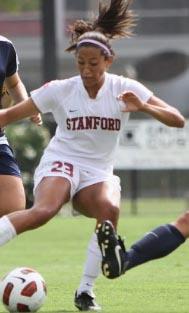
 Christen Press
Nation’s top goal scorers talk PKs

November 25, 2010


Sydney Leroux never actually saw the ball sailing over the post. By the time she’d looked up, it was far beyond her crosshairs.
But that’s when she heard it; the sound of the ball grazing the crossbar. And then she felt it - the weight of the moment.
And she still feels it.
Before Leroux missed that must-make penalty kick while playing against Nigeria for the U.S. U20 Women’s team this past summer in Germany, PKs were like cash deposits in her goal bank.
Christen PressBut that single kick changed things. PKs have a tendency to do that. It can be the most pressure-packed instant in soccer and the cumulative effect can take its toll, even on a player as great as Leroux.
“Ever since that kick I’ve kind of stepped away from taking PKs, just until I get my rhythm back,” said Leroux, UCLA’s star forward. “Before, I was always excited because I knew I had a great chance of scoring. But now things have changed because the memories are still very clear in my mind. But I'm definitely getting back to where I used to be.”
It seems ironic that something as a simple as a free shot at the goalkeeper – one of the easiest looks a striker will ever see – can cost so much.
So far in the NCAA Tournament, 12 programs (seven women’s and five men’s) have been eliminated on account of penalty kicks.
That’s 12 separate seasons dashed in a matter of a single solitary kick.
Come this weekend, the Women’s NCAA Tournament will narrow down to two final teams while the men trim to four.
And don't be surprised if somewhere in all those marquee matchups, PKs emerge as a factor. A team or two could very well advance or head home because of them.
For a shooter, a PK is the rare spotlight you hope to avoid, yet still relish when it arrives.
“I don’t plan on going to a PK shootout anytime soon,” said Stanford’s Christen Press, the nation’s leading scorer who has her Cardinal squad in the College Cup. “It feels like a relief when you make one, and exponentially more terrible to miss.”
Most players know that ‘terrible’ feeling all too well. A shooter is expected to always make a PK – it’s kind of thankless in that way – and when they don’t it’s a lost opportunity.
This is the burden a shooter takes with them to the box, when they line up the ball and go through a routine that gives them the best chance to score.
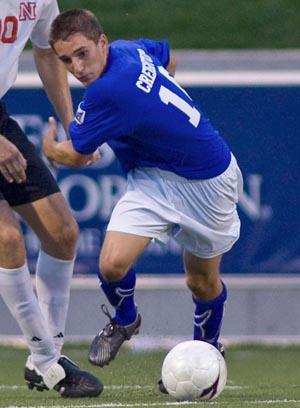 Ryan Finley“The best approach is to pick your spot and be confident,” said Duke’s Ryan Finley, whose team was eliminated in the second round of the tournament. “I usually like to go to the same spot on the field – I’m more comfortable going to the spot I’ve practiced. To make one is a sigh of relief, to miss one is heartbreaking.”
Or, pulsating, depending on which side you’re on.
For a goalkeeper, facing a penalty kick is like playing with house money. A keeper is expected to fail as is. It’s the ultimate opportunity to be a hero.
Just ask Brown keeper Paul Grandstrand, who stopped two Connecticut penalty shootout attempts in the second round of the tourney (never mind that Connecticut scored on him six times during the session) to give his program a dramatic upset win.
“That’s the glory behind being a goalkeeper in a penalty shootout,” Grandstrand said. “When you save a PK, an incredible amount of adrenaline comes over you. After I saved UConn’s third shot, I had to regain my composure and get ready to face their fourth.”
And while a shooter is getting ready to place the ball in goal, the opposing keeper is doing whatever they can to impede that process.
There’s stalling, eye-contact and gamesmanship.
“When we’re lining up for the kick I try to look as big as possible by bouncing around and putting my arms out,” said BYU keeper McKinzie Olson. “I’m not really sure if this gives me a mental edge but it definitely makes me feel more confident.
“I used to try and read the striker from the beginning. I would watch them walk up, see where they were looking and try to decide which way I thought they were going to go. But once I stopped doing that I became much more successful in PK situations. So now I just make sure I focus on myself. That would be my advice to anyone in a PK situation.”
Good advice. But as the tournament has shown us thus far, and will undoubtedly reveal again this weekend, that’s so much easier said than done.
But that’s when she heard it; the sound of the ball grazing the crossbar. And then she felt it - the weight of the moment.
And she still feels it.
Before Leroux missed that must-make penalty kick while playing against Nigeria for the U.S. U20 Women’s team this past summer in Germany, PKs were like cash deposits in her goal bank.
Christen Press“Ever since that kick I’ve kind of stepped away from taking PKs, just until I get my rhythm back,” said Leroux, UCLA’s star forward. “Before, I was always excited because I knew I had a great chance of scoring. But now things have changed because the memories are still very clear in my mind. But I'm definitely getting back to where I used to be.”
It seems ironic that something as a simple as a free shot at the goalkeeper – one of the easiest looks a striker will ever see – can cost so much.
So far in the NCAA Tournament, 12 programs (seven women’s and five men’s) have been eliminated on account of penalty kicks.
That’s 12 separate seasons dashed in a matter of a single solitary kick.
Come this weekend, the Women’s NCAA Tournament will narrow down to two final teams while the men trim to four.
And don't be surprised if somewhere in all those marquee matchups, PKs emerge as a factor. A team or two could very well advance or head home because of them.
For a shooter, a PK is the rare spotlight you hope to avoid, yet still relish when it arrives.
“I don’t plan on going to a PK shootout anytime soon,” said Stanford’s Christen Press, the nation’s leading scorer who has her Cardinal squad in the College Cup. “It feels like a relief when you make one, and exponentially more terrible to miss.”
Most players know that ‘terrible’ feeling all too well. A shooter is expected to always make a PK – it’s kind of thankless in that way – and when they don’t it’s a lost opportunity.
This is the burden a shooter takes with them to the box, when they line up the ball and go through a routine that gives them the best chance to score.
Ryan FinleyOr, pulsating, depending on which side you’re on.
For a goalkeeper, facing a penalty kick is like playing with house money. A keeper is expected to fail as is. It’s the ultimate opportunity to be a hero.
Just ask Brown keeper Paul Grandstrand, who stopped two Connecticut penalty shootout attempts in the second round of the tourney (never mind that Connecticut scored on him six times during the session) to give his program a dramatic upset win.
“That’s the glory behind being a goalkeeper in a penalty shootout,” Grandstrand said. “When you save a PK, an incredible amount of adrenaline comes over you. After I saved UConn’s third shot, I had to regain my composure and get ready to face their fourth.”
And while a shooter is getting ready to place the ball in goal, the opposing keeper is doing whatever they can to impede that process.
There’s stalling, eye-contact and gamesmanship.
“When we’re lining up for the kick I try to look as big as possible by bouncing around and putting my arms out,” said BYU keeper McKinzie Olson. “I’m not really sure if this gives me a mental edge but it definitely makes me feel more confident.
“I used to try and read the striker from the beginning. I would watch them walk up, see where they were looking and try to decide which way I thought they were going to go. But once I stopped doing that I became much more successful in PK situations. So now I just make sure I focus on myself. That would be my advice to anyone in a PK situation.”
Good advice. But as the tournament has shown us thus far, and will undoubtedly reveal again this weekend, that’s so much easier said than done.
Headlines
- Recruiting Roundup: June 8-14
- TDS Launches Video Highlight Service
- How Do I Get Scouted by TopDrawerSoccer?
- Women's Division I May Transfer Tracker
-
Commitments: Heading East

- MESA Academy Player Rankings: Boys 2027
-
Pacific NW High School Roundup - June
-
ECNL Girls NC: Under-15 Standouts
-
Southeast High School Roundup - June
- TopDrawerSoccer TeamRank Update - Girls
Madrid Euro Soccer Academy
Top 200 Rankings
Top 200 Rankings