Personal responsibility key for safe soccer
July 20, 2020


Last week, the U.S. Soccer Federation released the final update to its five phases guiding a safe return to play during the COVID-19 crisis.
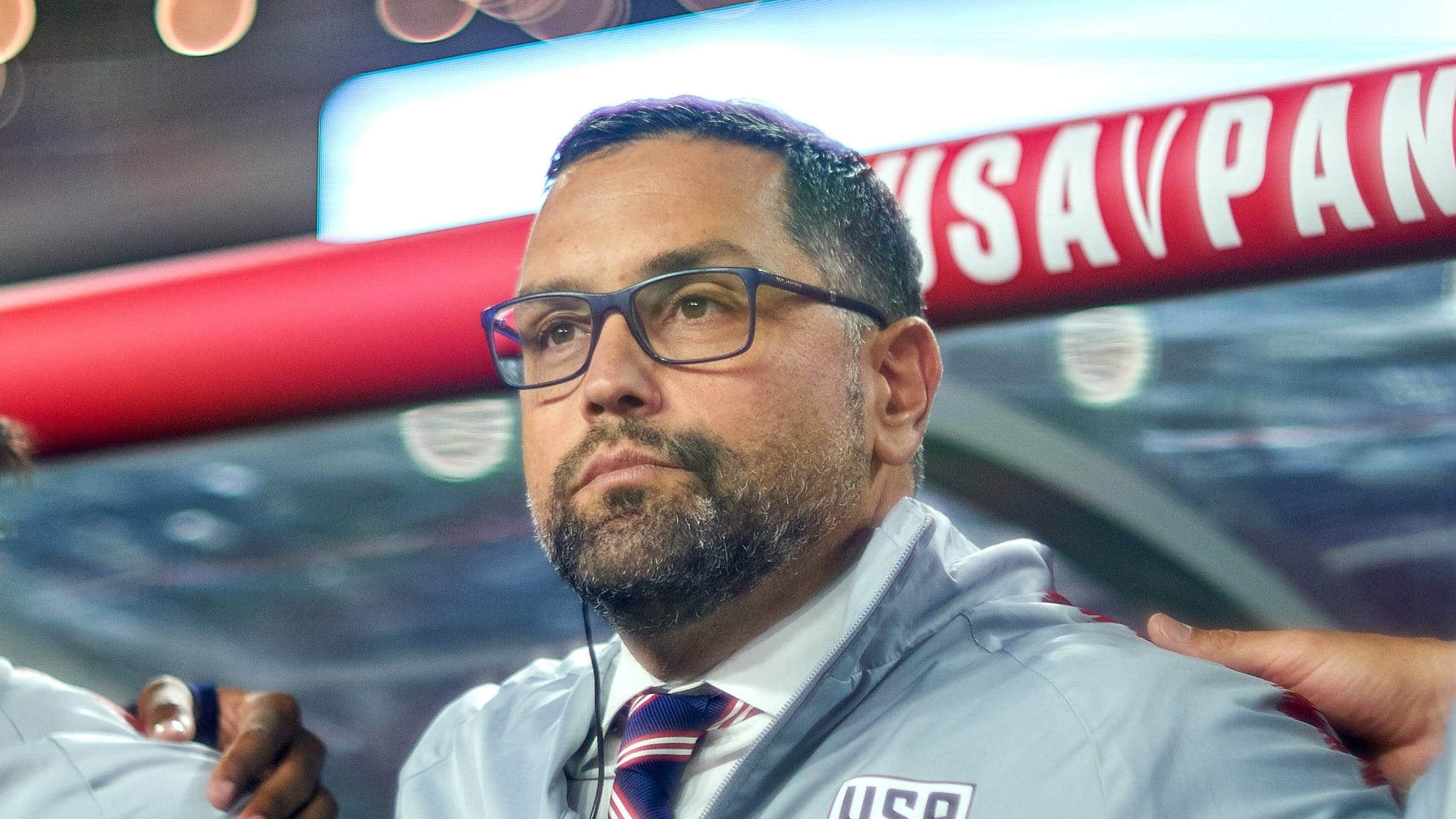
In an effort to provide and communicate steps to resume soccer safely for all stakeholders involved – parents, coaches, players and referees – U.S. Soccer Chief Medical Officer Dr. George Chiampas and the Federation released a series of guidelines to follow. More than two months of work went into the initiative, which outlines important ways to play soccer at various levels around the country.
While there is ample guidelines to follow, Chiampas indicated that personal responsibility is the biggest factor in keeping people safe and on the field.
“In the moment that you’re not practicing and not playing, follow those [local health] guidelines, be really true to those and those will allow you to have those 90 minutes of really good training, of being able to get back to fun, to the sport that you love,” he told TopDrawerSoccer. “Wear a mask before you go to practice and on your way, do the daily screens, so if you check all those boxes, then the box of being able to participate and have fun in sport are going to be available. I think that’s really the biggest thing.”
Chiampas said that the Federation has been aware of the Coronavirus dating back to January. The U.S. Under-18 Women’s National Team played the Tricontinental Cup in Florida, welcoming national teams from China, Norway and the Netherlands. Communication with local officials there was put into place, but as Chiampas noted, it was before the world really knew what the virus could do.
From that point on, Chiampas has been working with key groups from around global soccer and the United States.
“Since that time, quite honestly it’s been gathering a tremendous amount of information,” he said. “We’ve been a valuable resource to Concacaf, MLS, USL, NISA, NWSL, where all of us would have weekly calls so we could provide updates from the leagues, from FIFA, from Concacaf and U.S. Soccer has been the mediator and the conduit in that.”
Everything that he’s learned and been able to find out about the virus and its impact on soccer has gone into putting together the guidelines. Several leagues have restarted over the past two months, providing more and more data about the coexistence of soccer and the virus.
When it comes to the danger of transmission during play, Chiampas cited two studies completed in Denmark and Holland.
“Those two studies suggested that the duration of time that social distancing was broken was not that significant,” he said. “And that the moments that we’re probably the riskiest as you can imagine were set pieces. Free kicks, corner kicks, celebrations and those are the moments that we can probably control a little bit better.”
Adding more teeth to the study is the fact that in Germany and the United Kingdom, where U.S. men’s national team players are competing, there hasn’t been a high rate of positive tests at all – much less attributed to action on the field.
“What we’re seeing in the Bundesliga and in the Premier League is that the games are going on, and for the games to be going on, we know that testing is taking place, you’re not seeing a cluster of positive tests that are associated with playing,” Chiampas said. “I think that’s something we can all take some level of comfort but with caution.”
Back in the United States, things are changing rapidly, with case numbers rising in the majority of states. That obviously makes it tricky to implement guidelines about a sport for youth or college soccer from a national perspective.
But Chiampas did have some insight on how various levels of the game could adapt in order to facilitate some kind of safe resumption of competition.
“The first thing that everybody has to make a decision and get comfortable with is that 2020 is not going to be what the past has been,” he said. “And that may mean that the NCAA has to reconfigure conferences. That may mean on the youth side, that travel soccer is something that is going to be a large challenge and difficult. But if you can regionalize your matches and your match play, can you create matches that are single day matches – meaning you travel with your parents or very small group car pools, you play a match and you get home?
“I think those are creative ways [to play], and that is what 2020 is honestly going to look like. To suggest in our daily life for 2020 is going to be the same as what it was in 2019 is fault, and I think the sport of soccer has to do the same, whether it’s college, high school, the club side. That’s just likely going to be the reality of it.”
Part of FIFA’s medical task force, Chiampas continues to seek out and receive input from around the globe. Discussions are ongoing about when or where international soccer could possibly resume, although a lot of that will be dictated by how leagues are able to function in each country.
In an effort to educate and keep things as streamlined as possible, the Federation is also in contact with coaches and referees in order to make sure they are part of the phased-in approach. In some ways, the Coronavirus is just another element of the Federation’s already established health and safety protocols, such as heat guidelines, concussions or watching out for sudden cardiac arrest.
But the virus isn’t going anywhere. So for Chiampas, it’s about finding a way forward responsibly, but not losing sight of the fact that the virus hasn’t changed, and it’s still here and spreading. In order for soccer to be played safely, it comes back to taking a pledge to be responsible, both personally and collectively, understanding what it will take to be safe. And that’s the overall goal of the Play On campaign.
“It’s important for all of us to continue to create the same message, to instill good guidelines and good practices, to constantly have that level of awareness and education,” Chiampas said. “Because until we get a vaccine, until we get good effective treatments, this will be the state of soccer and the state of our lives right now.”
Headlines
- Recruiting Roundup: February 9-15
- Professional Signing Tracker: 2025-26
- Ranking the Top 50 MLS Prospects: 2026
- 2026 Women's Division I Transfer Tracker
-
Best U15 Girls Outside of ECNL and GA

- U19 WNT Roster for Portugal Trip
-
2026 Top 50 MLS Prospects: Nos. 31-40
-
ECNL Girls North Atlantic Conf. Preview
-
Commitments: HS Shot-Stopper Stays in NY
-
Best U14 Girls Outside of ECNL and GA
Top 200/150 Club Player Rankings
